
At first glance, innovation and foreign policy seem worlds apart. Researchers, entrepreneurs, and business people on one side, ambassadors, diplomats, and policy makers on the other. But they have more in common than first meets the eye. And more need to collaborate than ever before.
Tag: purpose
Innovation is a hostile act
For many good reasons, innovation is widely appreciated as a positive force, as the driver for progress and prosperity. But make no mistake: innovation has serious downsides, at least for some, at least sometimes. Even though these negative impacts are far outweighed by the positive effects, they are the source of considerable push-back and utter resistance to innovation. And it would be too easy to dismiss justified concerns as irrational, dump, backwards-oriented, or fear-mongering. It's time to cast some light on the hostility even the best intended innovator might be faced with. It's time to acknowledge that innovation itself is a hostile act. Here's why.
Reinventing time
The times they are a-changin'. This Bob Dylan song has a deeper meaning than we usually realise. For our sense of time, of the pace and direction of its flow, transformed several times in human history. And this perception is undergoing significant changes again today. So here's a short story about our sense of time, how it evolved, and how it shapes our liberties and certainties.
Where’s your innovation focus? – Part 1: Harmony
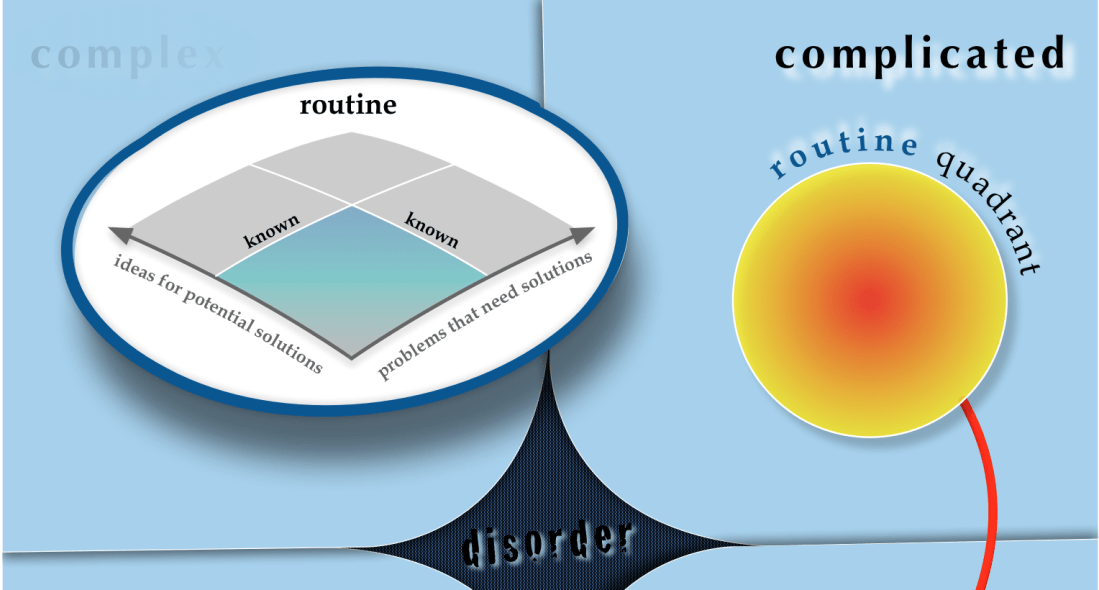
Innovation is never easy. Regardless of its purpose, you'll always have a lot to take into account: needs and expectations, resource implications, rules and regulations, the state of the art as well as technical limitations of legacy systems. Wrestling with all these constraints can easily distract you from your ultimate goal. To help you find your innovation focus, I'll revisit two conceptual maps I've discussed earlier to develop a hybrid navigation aid that combines the best of both concepts.
Embrace the seeming paradox!
Let's face it: your problems are like spoiled brats, just too willing to misbehave. And they can easily afford to be ill-tempered, irrational, incoherent, inconsistent. However, you cannot. Not as an individual, not as a leader, not as an organisation. For you must uphold some level of coherence and consistency to maintain your credibility (and I would add: your self-esteem). How can you achieve that goal if your problems obviously don't play fair?
 understanding innovation