
Unlike the natural agents, which are born, artificial agents are human-made; artificial agents spring from human agency. I will introduce them as three groups that are not perfectly delineated: organizations, technologies, and socio-technical systems. Let's start with organizations, which we use to structure our interactions with others, be that for social, political, or economic purposes.
Tag: organisation
Studies in innovation – An initial curriculum
In order to frame the concept of innovation literacy, today I’ll try to sketch a curriculum for “Studies in Innovation”, focussing on “How to think about innovation?” My story line will build on three guiding questions: What is the world around us made up of? How does that world behave? And how do we act in this world? While I'll keep my focus on the needs of innovators and policy makers, I believe the essence of this little programme should be of interest to a wider audience.
Formatting our world
The language we speak, the organisation we live or work in, and the technology we use all have one thing in common: they format our world. They shape how we think about it, how we see it, how we behave in it, and how we interact with it. All that formatting has tremendous advantages in our day-to-day lives. Yet it also provides an explanation for the challenges innovators face when they develop something novel that does not fit any of the pre-established formats.
How to have more insights
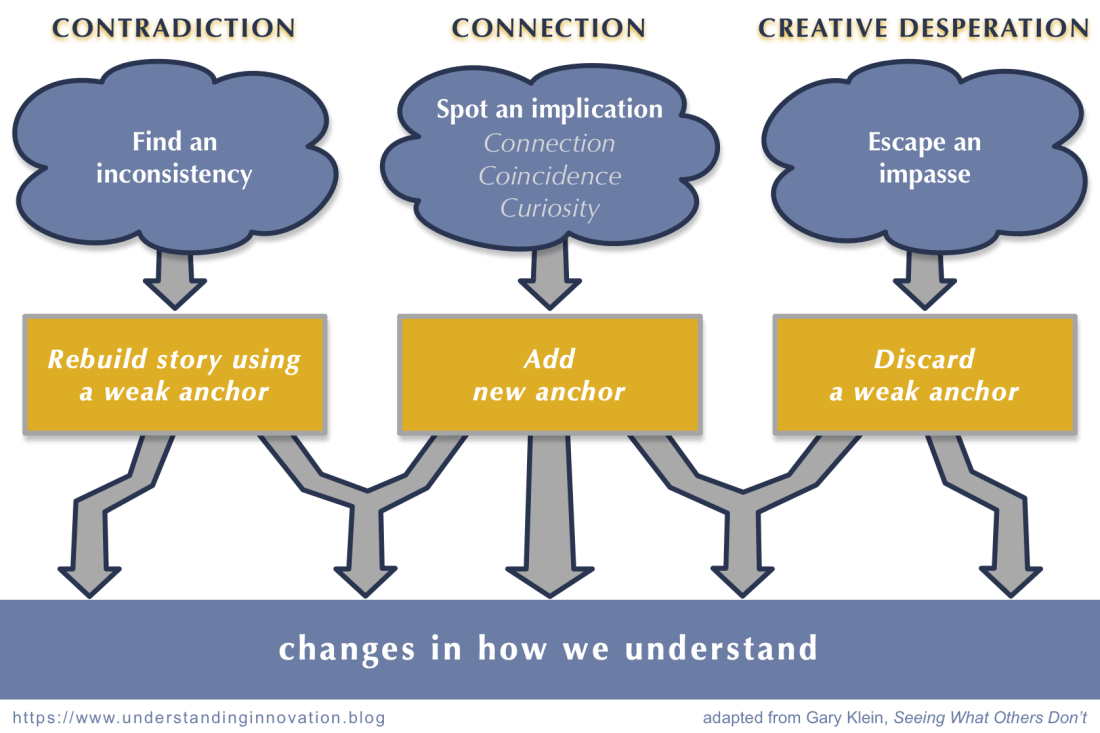
The cognitive psychologist Gary Klein proposed the triple path model to explain how we have insights. Furthermore, Klein systematically searched for hindrances and encouragements to having insight. It should be interesting to compare his findings with Steven Johnson's analysis of the conditions that make good ideas flourish. Good ideas need insights, and conditions for the success of one should promote the other. Let's find out.
Exploring the adjacent possible – Next steps
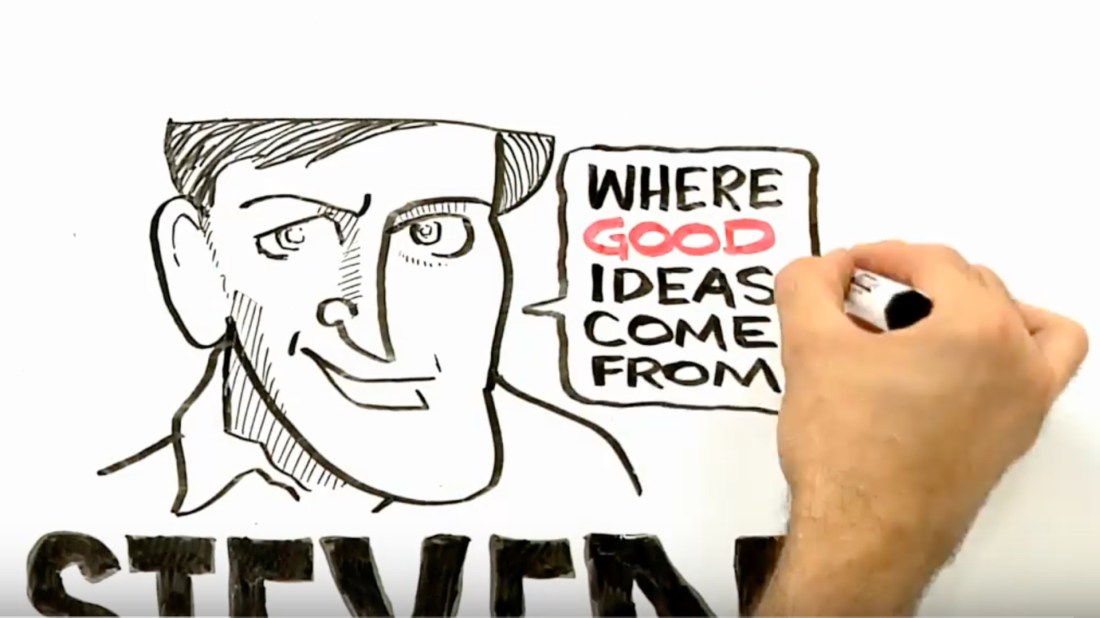
Steven Johnson investigated the types of environment that nourish fledgeling innovations, and presented his analysis in "Where Good Ideas Come From". In his conclusions he explores the available data on about 200 of the most important good ideas of the past 600 years and derives some insightful advice for fostering innovation in the 21st century.
 understanding innovation