
As we increasingly view technology as a resource, we must, as a society, rethink our approach to exercising control over technology: from handling individual products and services to controlling a constant stream of technologies to managing technology flow. Here's why. Technology is a resource In the previous post, I shared my view that technology becomes less and less tangible, … Continue reading How to manage technology flow
Tag: knowledge
On the freedom and responsibility of science
The freedom of science is a highly valued and widely appreciated principle. Or so I thought - until Andy Borowitz reminded me of the contrary with his recent news satire in The New Yorker, in which he mocks the growing anti-knowledge attitude in some parts of the U.S. political establishment. Thus triggered to think twice, I'll dwell a little … Continue reading On the freedom and responsibility of science
Some second thoughts on first contact
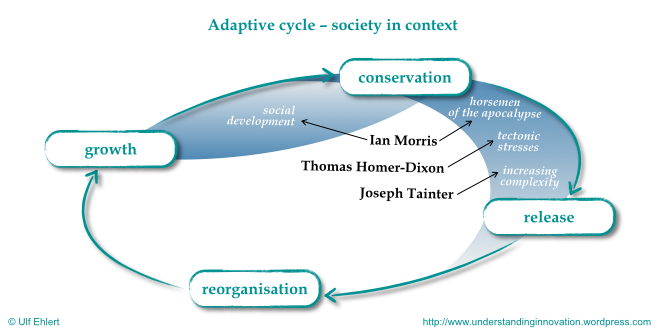
The concept of adaptive cycles can serve as a framework for a rich discussion on innovation. However, before diving deeper into the specifics of the concept, let's look at the basic description of the adaptive cycles again and review some of the earlier posts on this blog: to what extent do those ideas fit with this concept? I'd … Continue reading Some second thoughts on first contact
How information flow empowers innovation in the future
The flow of information, its density, volume and accessibility are essential underpinnings to a society's innovation capacity. In this short series of posts, I've taken a historic perspective, looking at the information revolution in the middle ages, and at the technological and societal developments up to the 20th century, before turning to the 21st century and the dominant … Continue reading How information flow empowers innovation in the future
How disruption pushes the boundary …
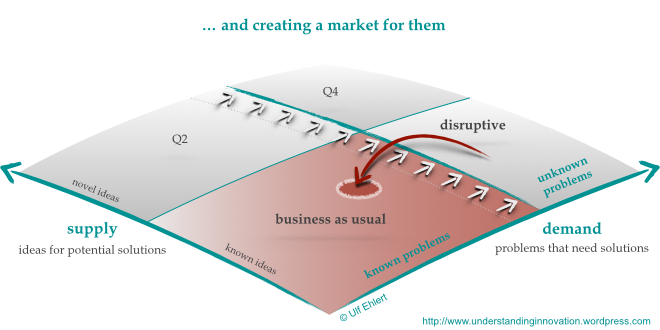
The innovation landscape I have sketched previously suggests that there could be some kind of symmetry. The third quadrant (disruptive) should have some similarity with the second quadrant (research), shouldn't it?
 understanding innovation