
With the advent of movable type printing and wide-spread literacy in the 16th century, society departed from its traditional person-to-person mode of information exchange and entered into a new era: since those days, ideas can travel independent of a human carrier. What did we do with this new freedom; how did the patterns of information exchange evolve … Continue reading How information flow empowers innovation – Part 2
Category: business & economics
Empowering innovation
Most often, the term empowering innovation is used as a synonym for disruptive innovation. For good reason, as these terms vividly describe two different views of the very same type of innovation: taking of complex and expensive product or service, and making it simpler and more affordable is the underlying definition that you'll have seen … Continue reading Empowering innovation
A vision for economics
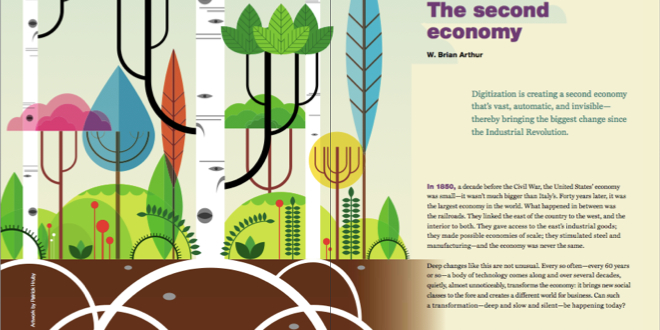
What could our economy and society be like in thirty to forty, maybe even fifty years? Just doing the same things differently? Or doing really different things? What could those things be? And what could economics tell us about that far-term future? If you ask for such genuine vision, the reaction you'll most likely receive ranges somewhere between an innocent shrug and a linear extrapolation of the recent past: neither inspired nor very inspiring. With only few exceptions.
And what about the risk of innovation success?

The outcome of any innovative endeavour is by no means certain. Rather, innovation entails risk for the innovator as well as for the society he's working in. The first might be considered the risk of innovation failure, which I have already addressed in a previous post. The second risk is the risk of innovation success, and that's what I'll focus today's post on.
Who bears the risk of innovation failure?
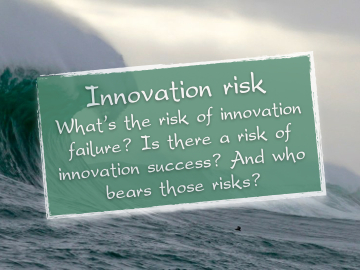
Innovation is all about novelty, about charting new territory and sailing unknown waters. This implies that the outcome of any innovative endeavour is by no means certain, let alone predetermined. On the contrary, innovation clearly entails risk, and in fact two different types of risk: one is for the innovator, the other for the society he's working in. With only mild exaggeration, you might consider the first the risk of innovation failure, whereas the other is the risk of innovation success.
 understanding innovation